

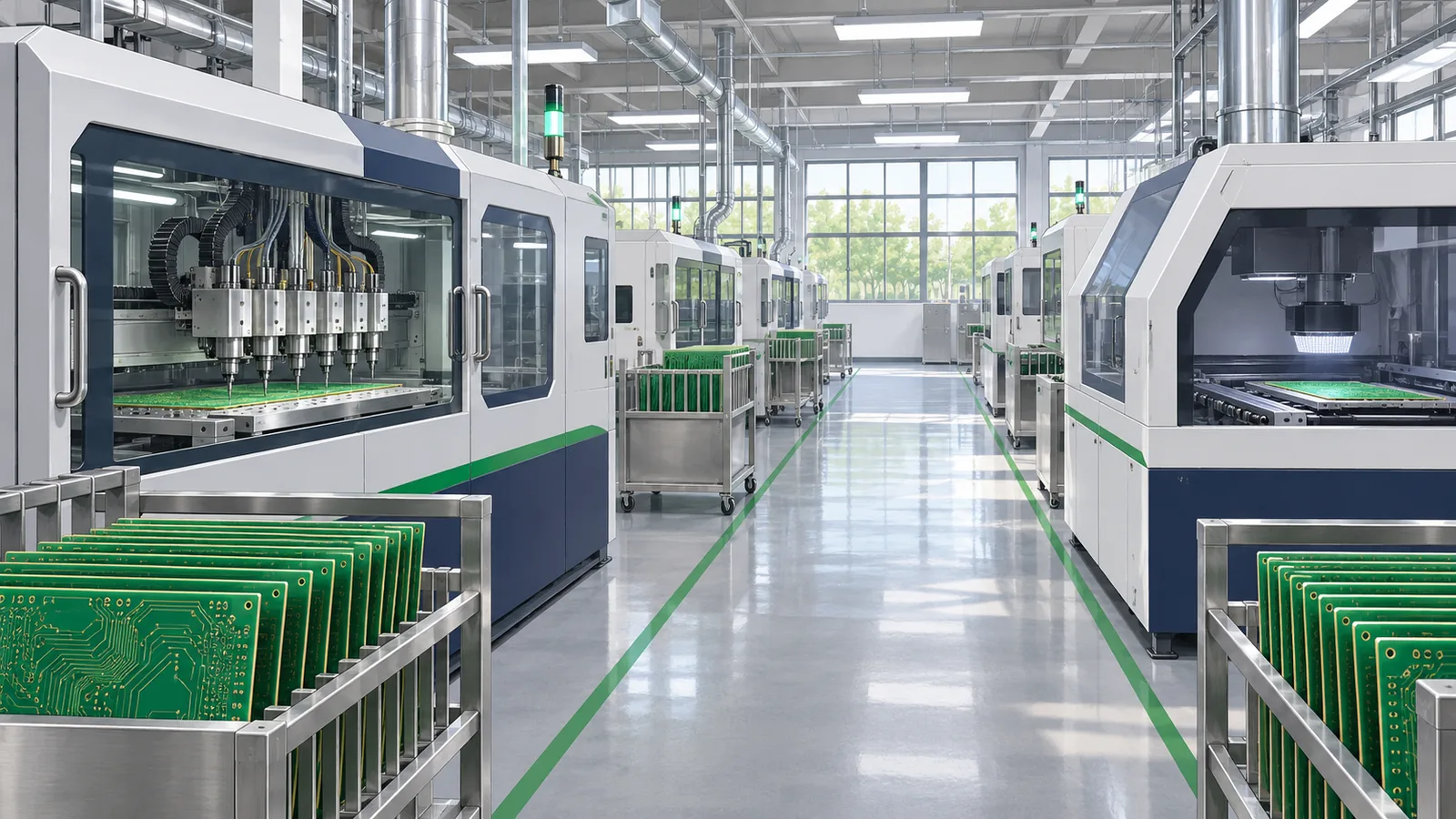
Battery monitoring and drive control need different release packages.
Camelot’s official catalogue lists battery-management and electric motor-controller PCBs as separate applications. Its catalogue does not attach layer counts, copper weights, material grades or dimensions to those entries. Review each application against the submitted drawing and the intended production site.
Battery-management system PCB
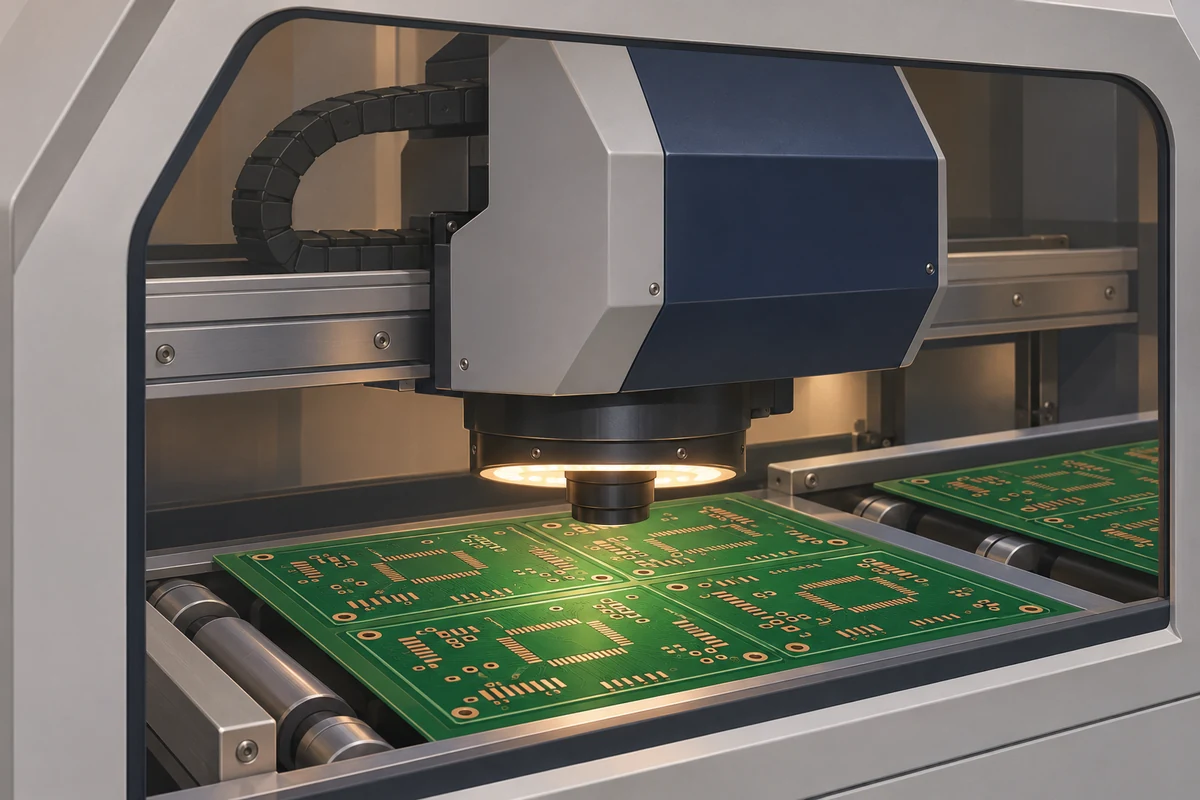
Release the monitoring and isolation requirements.
Provide the approved stack-up, sensing/measurement interfaces, isolation boundaries, connector drawings and coating or assembly requirements. Specify the operating and test conditions that determine insulation acceptance and any controlled geometry. Identify the requirements of your actual BMS architecture rather than relying on the application label.
Define the evidence delivered with a lot.
Agree the electrical-test method, laminate and copper identification, required coupons or cross-sections, lot marking and inspection records. If an automotive customer requires a production approval package or change-control process, name the deliverables and approving party in the request.
Electric motor-controller PCB
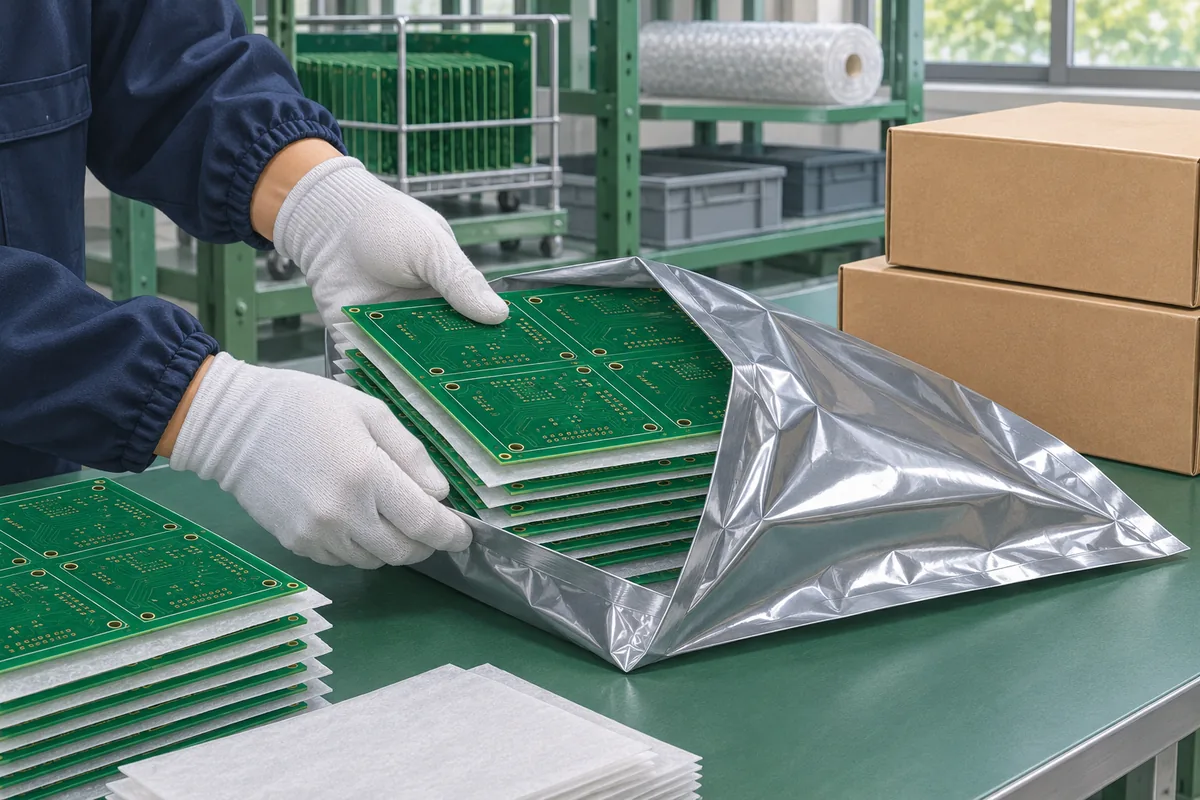
Separate control signals from the power requirements.
Supply the mechanical outline, mounting and connector datums, copper distribution, finished thickness and the assembly interface. Where current carrying or heat removal matters, release the design’s actual copper, insulation and thermal requirements and agree how they will be measured.
Resolve special fabrication before price comparison.
Camelot lists embedded copper blocks, controlled-depth drilling and via filling in its general process table. If your drawing needs one of these, request a construction-specific review: copper-block position and height, drill-stop datum, filled-via acceptance or surface planarity. The catalogue entry does not identify which of those processes is used on a particular ordered board.
Use the process table as a review envelope.
The manufacturer labels this table “2025”. Its listed values describe a general process envelope, not a combined approval for either automotive catalogue entry. Have the factory mark up the submitted construction and identify which limits apply together.
Up to 28 layers; board thickness 0.3–5.0 mm. Inner and outer base copper ⅓–6 oz. Base copper is not automatically the finished plated conductor thickness.
Inner and outer line/space 0.05/0.05 mm; published impedance tolerance ±8%. Release laminate, dielectric/copper thickness, target and test-coupon geometry together.
Minimum aperture 0.1 mm; source does not define it as a finished plated hole. Through-hole plating aspect ratio 16:1; micro-through/micro-blind ratio 1:1. Plated-hole tolerance ±0.04 mm; non-plated ±0.025 mm.
Outline machining tolerance: sample ±0.05 mm, volume ±0.1 mm. Maximum delivery size: sample 600 × 1180 mm, volume 600 × 860 mm. Check whether the quoted drawing is a sample or series-production release.
Match the UL construction as well as the file number.
Product iQ lists E350325 under ZPMV2 for Camelot Electronics Technology Co.,Ltd. The UL PWB JL-1 construction record names the Qingyuan address and specifies a 0.10 mm minimum conductor width, V-0 flame class and 130 °C maximum operating temperature. Those values apply to JL-1, not to every board covered by the file. The same record shows report date 3 December 2011 and last revision 17 August 2016; these are not expiry dates.
Camelot’s general process table lists 0.05 mm minimum line width. That manufacturing limit and JL-1’s 0.10 mm minimum concern different scopes. A drawing using finer lines needs the matching UL type designation and its construction limits; the file number alone does not resolve the difference. The records checked identify the Qingyuan holder, not automatic coverage of the Anlu and Suining entities.
Specify a finish, including its thickness.
The finish table lists immersion gold at 0.025–0.125 μm gold over 3–5 μm nickel, and gold fingers at 0.125–2.0 μm gold over 2.5–7 μm nickel. These are different process entries. It also lists immersion silver, immersion tin, OSP and HASL; choose the intended finish against the assembly, contact and storage requirements.
Back drilling, depth-controlled drilling, via filling, mechanical blind holes and embedded copper blocks require their own drawing details and inspection criteria. A list of processes cannot determine a permissible stub length, fill quality or copper-inlay tolerance for your order.
Nominate the site and the outsourced steps.
The official company profile lists Qingyuan, Anlu and Suining production bases. Its Hubei page names wholly owned Hubei Camelot Technology Co., Ltd., established in December 2017, at Special No. 8 Jiangxia Avenue, Anlu. The half-year report separately identifies Suining Baifang Electronics as an indirectly controlled subsidiary; Hong Kong and Shenzhen entities must not be counted as additional fabrication plants simply because they appear in the subsidiary menu.
The 2026 half-year report says some processes and some orders may be outsourced when the company’s own capacity cannot meet demand. Ask which steps of your order will stay at the nominated plant, which may be subcontracted, how the processor is approved and how material and inspection records follow the lot. The annual report separates in-house production from fully outsourced production, which makes that allocation relevant to the quotation.
Read project maturity and certificates at the right scope.
The report’s page 17 describes a 26-layer mixed-lamination embedded-resistor antenna board and a 16-layer, two-step HDI thick-copper secondary-power board as trial builds sent for customer validation. Other named applications had moved into volume production. Do not treat trial success as a blanket production qualification. The same page attributes a Nadcap PCB-manufacturing statement specifically to Baifang, not to every Camelot plant; a current certificate and approved scope are still needed for a purchasing decision.
Turn the equipment page into an inspection discussion.
Camelot labels drilling, plating, lamination and finishing photographs, and lists electrical test, four-wire test, insulation-resistance/thermomechanical analysis and scanning electron microscopy. The page supplies no complete model, quantity, calibration or site-allocation record. “Laser printing” is the source’s label and is not evidence of a laser-drilling machine. Request the actual proposed test method and records for your board, rather than treating equipment photographs as completed order inspections.
A useful first RFQ
Include the subsystem, fabrication drawing and revision, stack and material grade, base/finished copper, hole definitions, special processes, surface finish, inspection plan, prototype and annual-volume needs, nominated site and subcontracting/change-control requirements. The public market contact is market@camelotpcb.com; its presence on the official site is not a delivery test or proof of an authorised account.
Build the engineering brief →Sources behind this profile
Updated 4 November 2026. Process limits, dated issuer disclosures, company-published certificate copies and UL construction records are identified separately. Illustrations depict generic processes rather than Camelot facilities or products.
- UL / PRODUCT IQE350325 holder and ZPMV2 listing, checked 4 November 2026 ↗
- UL / PWB CONSTRUCTIONJL-1 scope, Qingyuan address and dated construction limits ↗
- ISSUER / 2025 ANNUALCNInfo: legal names/address p6, group capacity p20, output p22, subsidiaries p29 ↗
- MANUFACTURER / CERTIFICATE COPIESDEKRA certificate copies, scope and printed validity dates ↗
- MANUFACTURER / ENTITYCompany history, current three-base footprint and market contact ↗
- MANUFACTURER / CATALOGUEBMS and motor-control application/photo pairs ↗
- MANUFACTURER / 2025 TABLEDesign parameters, separate sample/volume entries and surface finishes ↗
- MANUFACTURER / EQUIPMENTNamed production and test categories; no complete site inventory ↗
- MANUFACTURER / HUBEIAnlu subsidiary identity, address and original factory photo ↗
- ISSUER / 2026 HALF-YEARCNInfo: legal English name p6; automotive p10–11; outsourcing p14–15; development and site projects p17 ↗