
In this guide
A material name answers one question: what does the supplier say it can use? Traceability answers a different question: which material went into this particular production lot, and what records connect the two? A PCB profile that lists “FR-4” has not answered the second question.
This note proposes a purchasing checklist. It is not an allegation about any manufacturer, and it does not establish that a named material is suitable for your design. The objective is a documented link from an agreed material specification to the boards you receive.
Start with a material designation you can check
Ask for the laminate manufacturer and exact grade, together with the proposed core and prepreg construction where that detail matters to the design. Record the agreed stackup revision and the properties your engineer actually needs to control. “FR-4,” “high Tg” and “equivalent material” are not interchangeable ways of specifying a particular product.
Isola's FR408HR product information illustrates why a named grade is more useful than a broad family label: its documentation distinguishes laminate and prepreg and identifies property test methods. A headline property value should therefore be read with its method and conditions. This example does not endorse one brand or establish what any factory has purchased.
Keep the supplier's proposed material list with the quotation. If several grades are acceptable, name them explicitly and have engineering approve the alternatives. A brand list on a website should not silently become an unrestricted substitution clause in a purchase order.
Build a chain of records, not a folder of unrelated PDFs
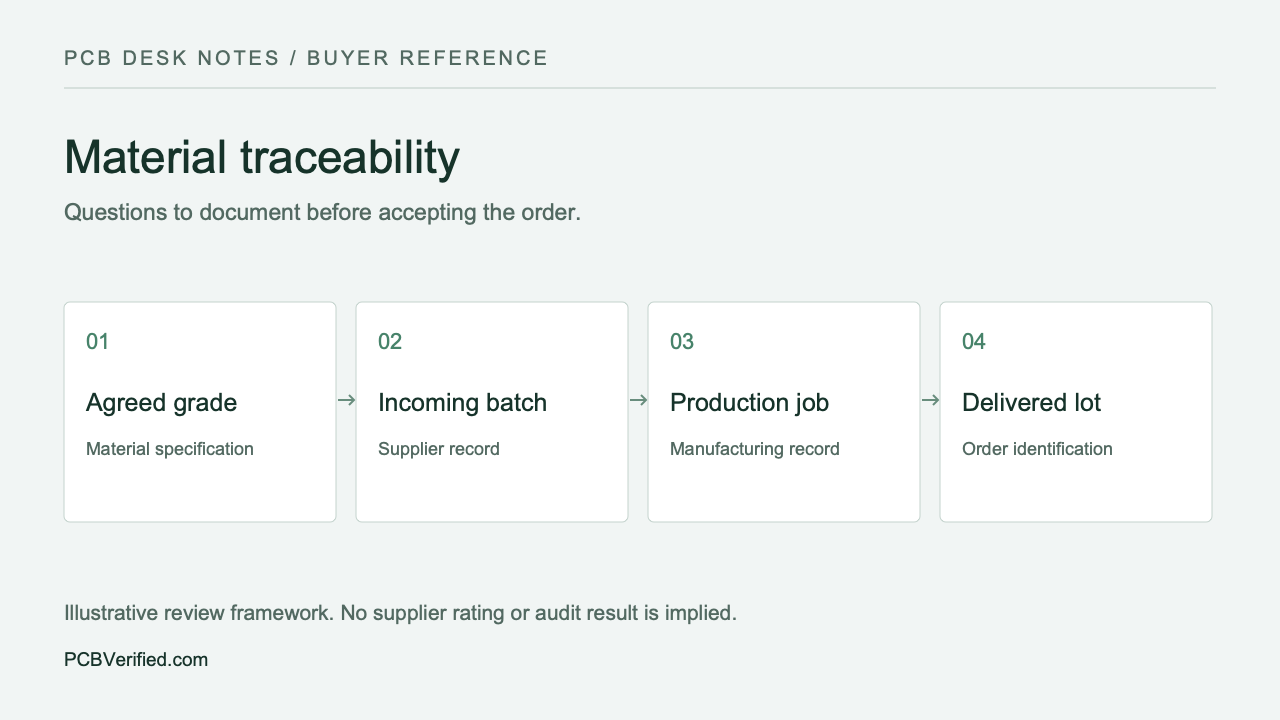
Our suggested review starts with the incoming material identifier. Ask the factory how the manufacturer's lot or batch reference is recorded at receipt, how material issued to production is associated with a job, and how that job is associated with the delivered board lot.
Next, request a redacted example showing the connection. The same job or lot identifiers should let you follow the path between records. Depending on the agreed control plan, those records might include a supplier certificate, incoming inspection record, material issue record and manufacturing traveler. The useful evidence is the connection between them, not the number of documents attached.
Commercial pricing and unrelated customer information can be removed. Redaction should preserve the identifiers needed to assess the chain. If the factory cannot share a record, ask whether it can be reviewed under a confidentiality arrangement; record the remaining limitation rather than marking the evidence complete.
Know what each document leaves unresolved
A material datasheet describes a product. It does not identify the material delivered to a PCB factory. A purchase invoice may support a transaction, but it does not by itself show which production job consumed the material. A certificate associated with an incoming batch still needs a link to the outgoing board lot.
Similarly, a test result answers the question that was tested. Do not treat an electrical test report as proof of laminate brand, or assume that a generic conformity statement contains batch-level material evidence. Ask what was sampled, what identifier appears on the result and how that identifier relates to your order.
These distinctions help keep the discussion neutral. Missing evidence is a gap to resolve, not proof of fraud. A complete-looking document package is also not a substitute for checking whether the records refer to the same order.
Make substitutions an approval event
Before purchase, agree who may authorize a material change and how that authorization will be recorded. Ask the factory to disclose a proposed substitution before production, including its effect on the approved stackup and the requirements your design controls.
A practical change record names the original material, proposed replacement, affected order and revision, reason for change and approval date. It also states whether new validation or a revised quotation is required. Keep the decision with the manufacturing package so a later reorder does not inherit an undocumented exception.
Ask one question that exposes the missing link
“Please identify the proposed laminate manufacturer and grade for our approved stackup. Explain how incoming material batches are linked to our job and delivered board lot, provide a redacted example of that chain, and confirm that substitutions require our written approval before manufacture.”
Evaluate the answer against the records you agreed to obtain. If the supplier reports a brand but provides no lot linkage, describe the status as brand reported with traceability not yet reviewed. If records have been checked, retain the date, order scope and reviewer. Neither status should be presented as a guarantee for every future shipment.
What a PCBVerified profile can tell you
Use the directory to locate relevant material statements and evidence status, then confirm the order-specific chain with the selected factory. A reviewed profile is a starting point for due diligence. Material acceptance remains tied to the purchase specification, applicable testing and the delivered lot.
Sources & editorial scope
Reference publisher: isola-group.com. Original reference retained in the editorial record.
This guide is published by PCBVerified. Confirm design-specific requirements and supporting evidence against the applicable manufacturing profile.
How PCBVerified records evidence →